Glass Bong vs Acrylic Bong: Which Is Better for Everyday Use? | Namasteji
Glass Bong vs Acrylic Bong: Which Is Better for Everyday Use?
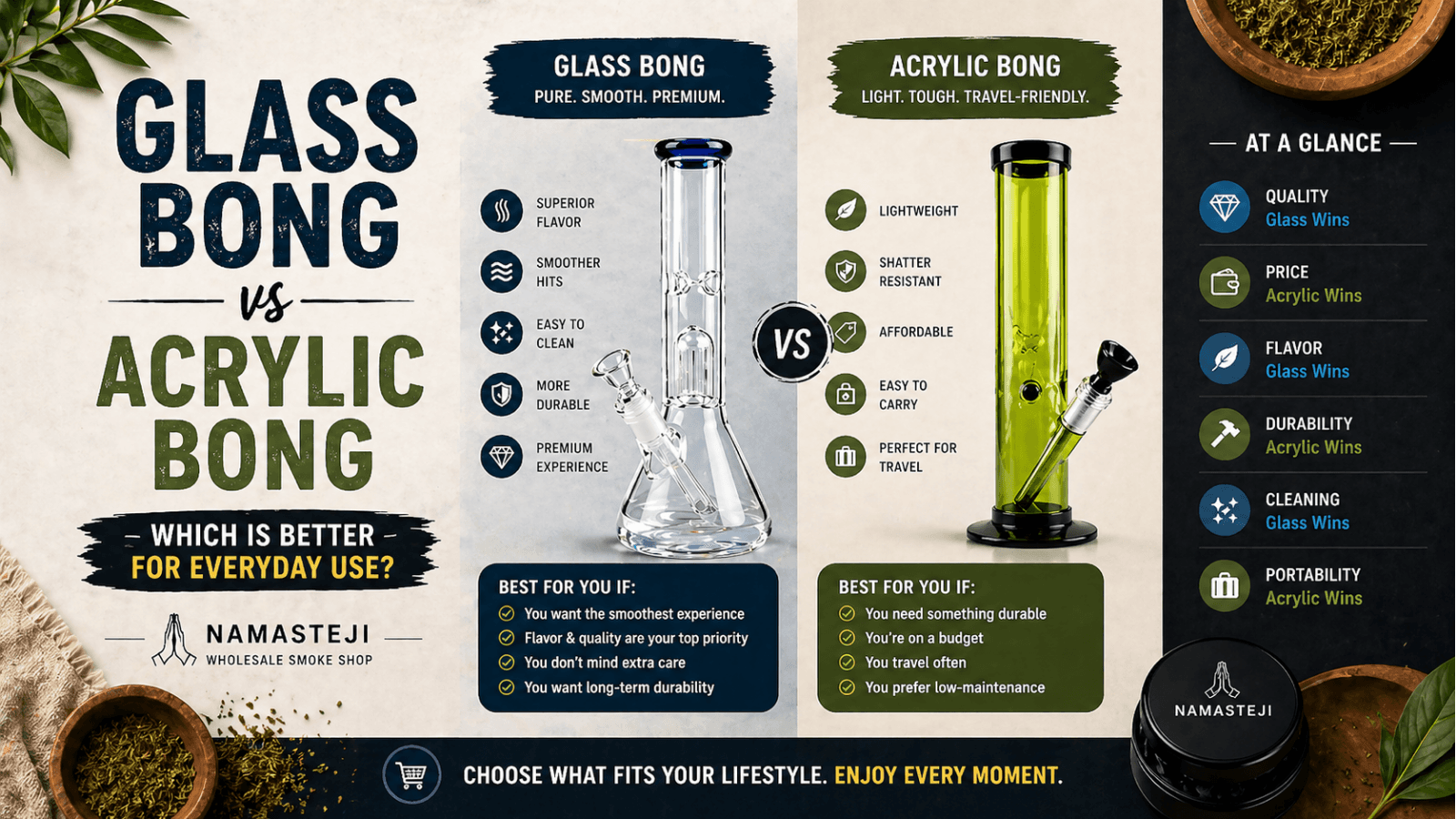
Choosing between a glass bong and an acrylic bong is one of the first decisions any new smoker faces - and it genuinely matters. The material affects taste, durability, maintenance, and long-term cost. This guide breaks down exactly what is different between the two so you can make the right choice for your needs and budget. Namasteji supplies UK smoke shops, headshops, and retailers with a full wholesale range of bongs and water pipes - glass water bongs, acrylic bongs, glass bubblers, and bong accessories. Everything in this guide is available through UK retailers who stock our range.
What Is the Difference Between a Glass Bong and an Acrylic Bong?
Both glass and acrylic bongs work on the same principle: smoke is drawn through water (which cools and filters it) before reaching the mouthpiece. The fundamental experience is the same. The differences are in material properties - and those differences have real practical implications.
Glass Bongs - Premium Experience, Handle with Care
Glass water bongs - particularly borosilicate glass - are the gold standard for bong smoking. The glass is non-porous, chemically inert, and adds no flavour to the smoke. Glass Water Bong options range from simple beaker-base designs to complex percolator bongs. Advantages: purest flavour, easy to clean, heat-resistant, visually premium. Disadvantages: fragile - drops can break it; heavier than acrylic; higher price point.
Acrylic Bongs - Durable, Affordable, Practical
Acrylic bongs are made from tough polycarbonate or acrylic. Virtually unbreakable under normal use, significantly lighter than glass, and available at a much lower price point. Acrylic Bong options are popular as beginner bongs and as outdoor pieces. Advantages: virtually unbreakable, lightweight, affordable. Disadvantages: can absorb odours over time, slightly affects flavour vs glass.
Glass Bong Types Available in UK Shops
Beaker Base Glass Bongs - The Classic Choice
The most stable design - a wide beaker-shaped base holds more water for better filtration and is harder to knock over. The most common glass bong type in UK retail and the most recommended starting point.
Straight Tube Glass Bongs
Simple, clean, easy to clean. Slightly less stable than beaker base but very easy to maintain - often at lower price points within the glass category.
Glass Bubblers
A bubbler combines water filtration with portability - compact glass water pipe, ideal for smokers who want filtration without the bulk of a full bong. Glass Bubbler options are popular as a middle-ground between a hand pipe and a full bong.
Percolator Bongs - Maximum Smoothness
Percolator bongs contain internal filtration devices that break smoke into smaller bubbles for maximum water contact - producing the smoothest, coolest smoke. Percolator Glass Bong options are a premium product aimed at experienced smokers who prioritise the quality of the smoking experience above all else.
Beginner's Guide: If buying your first bong, a medium-sized beaker-base glass bong is the best starting point. Most stable, great experience, widely available at accessible price points across UK smoke shops.
How to Choose the Right Bong for You
First-time buyer: medium acrylic or entry-level beaker-base glass - low financial risk while you learn your preferences
Regular home smoker: glass water bong - superior taste and easy cleaning make it the clear choice for regular home use
Outdoor or social use: acrylic - virtually unbreakable, ideal when breakage risk is higher
Portable with filtration: glass bubbler - water filtration in a compact format
Maximum smoothness: percolator glass bong - the smoothest, coolest smoke available
Find bongs near you at smoke shops across the UK - London, Birmingham, Manchester, Leeds, and Bristol. Browse the full wholesale range: Bongs & Pipes Wholesale UK.
How to Clean Your Bong Properly
For Glass Bongs
Empty and rinse with warm water after every session
Deep clean: fill with isopropyl alcohol and coarse salt, cover openings, shake vigorously for 30–60 seconds
Let soak 20–30 minutes for heavy buildup
Rinse thoroughly with warm water until completely clear
Allow to dry completely before using
For Acrylic Bongs
Empty and rinse after every session - never leave water sitting stagnant
Use warm soapy water and a pipe cleaning brush for regular cleaning
Avoid isopropyl alcohol - it clouds and degrades acrylic over time
Replace the water after every session for best taste
Most Impactful Habit: Replace the water after every session. Fresh water makes an immediate, significant difference to taste. A quick rinse after each use prevents residue buildup that makes deep cleaning much harder.
Frequently Asked Questions - Bongs & Water Pipes - User Guide
Q1: Which is better - glass or acrylic bong?
Glass is better for taste and long-term satisfaction; acrylic is better for durability and affordability.
Glass bongs deliver a purer, cleaner taste because the material is chemically inert and non-porous. Acrylic bongs are virtually unbreakable and more affordable - better for beginners, outdoor use, or situations where breakage is a risk. For regular home use, glass is the preferred choice for most smokers once they have decided to invest.
Q2: What is a beaker bong?
A beaker bong is a glass water bong with a wide, beaker-shaped base that holds more water.
The wide base gives two key advantages: more water volume for more filtration and a smoother smoke, and greater stability making it harder to knock over. Beaker bongs are the most popular glass bong design in UK retail and the most commonly recommended for beginners.
Q3: How much water goes in a bong?
Fill until the downstem is submerged by about 1–2cm - not too much, not too little.
The downstem should be submerged by approximately 1–2cm. Too little water reduces filtration. Too much makes drawing very hard or causes water to splash to the mouthpiece. Start at the minimum and adjust to your preference.
Q4: Do acrylic bongs affect taste?
Acrylic bongs can impart a slight plastic taste when new, which fades with use.
New acrylic bongs sometimes have a faint plastic taste that dissipates after a few uses. Regular water changes and cleaning minimises this. Experienced smokers who prioritise pure flavour strongly prefer glass - for beginners or casual users the taste difference is often not significant enough to justify the cost difference.
Q5: Are glass bongs worth the extra cost?
Yes - for regular home use, a glass bong is worth the additional cost.
The superior taste of a glass bong is immediately noticeable to most smokers who have used acrylic. Glass is also easier to clean thoroughly and less likely to retain odours. If you plan to use a bong regularly at home and can handle it carefully, the investment pays back quickly in session quality.
Q6: Where can I find bongs near me in the UK?
Bongs are available at dedicated smoke shops and headshops across the UK.
Smoke shops in London, Birmingham, Manchester, Leeds, and Bristol carry the widest range. Online retailers offer wide selection with fast UK delivery, often at better prices. Searching "bong shop near me" or "smoke shop near me" in your city will show the nearest options.
Q7: How often should I clean my bong?
Replace water after every session; deep clean weekly for daily users.
Replacing water after every session is the most impactful habit - stale water immediately affects taste. A full deep clean with isopropyl alcohol and salt (for glass) should be done weekly for daily users, or after every two to three sessions for occasional users.
Q8: Can I use a bong outdoors?
Yes - an acrylic bong is the practical choice for outdoor use.
Acrylic bongs are virtually unbreakable and handle the drops and rough handling of outdoor use. Reserve your glass piece for home use and use acrylic for outdoor sessions, camping, or anywhere that breakage would be a problem.
Q9: What is a percolator bong?
A percolator bong contains internal filtration that breaks smoke into smaller bubbles for a smoother experience.
Percolators create more, smaller bubbles from the smoke. More bubbles means more water contact and more cooling - producing a noticeably smoother, cooler smoke than a standard single-chamber bong. A premium product for experienced smokers who prioritise smoothness.
Q10: What accessories do I need for a bong?
At minimum: a downstem and bowl - most bongs include these; a cleaning brush and isopropyl alcohol are also useful.
Most bongs come with a downstem and bowl. Useful additional accessories include a cleaning brush, isopropyl alcohol and coarse salt for glass cleaning, an ash catcher (keeps bong cleaner for longer), and replacement downstems or bowls in case of breakage.
🏪 FOR RETAILERS & TRADE BUYERS - WHOLESALE UK
What Bong Buyers Tell You About Your Shop
A customer buying a bong is one of your highest-value customers. They will need accessories - replacement bowls, downstems, cleaning supplies - over time. They are also likely to buy rolling papers, tips, a grinder, and a lighter in the same visit or across subsequent visits.
Glass bongs are your premium range and your margin opportunity. Acrylic bongs are your entry-level volume range - they bring customers into the bong category who may upgrade to glass later. Stocking both ensures you satisfy every customer, from the first-time buyer on a tight budget to the experienced smoker seeking a premium glass piece.
Retail Insight: When a customer buys a glass bong, always recommend a cleaning brush and isopropyl alcohol. Customers who maintain their glass piece properly enjoy the experience significantly more - and are far more likely to return to your shop for accessories and eventually an upgraded bong.
Quick Summary for Retailers
Retailer Buying Guide
Two material tiers (acrylic entry, glass core/premium) and three size tiers within glass (small, medium, large). Always stock bong accessories alongside - bowls, downstems, cleaning supplies - as high-margin add-on sales from every bong buyer.
Browse the full wholesale bongs & pipes UK range at Namasteji.
Browse our range: Wholesale Bongs & Pipes UK
Related guides: Glass vs Acrylic Bongs: Wholesale Guide | Top-Selling Bong & Pipe Types in UK Smoke Shops
Frequently Asked Questions - For Retailers & Trade Buyers
Q1: Which bong type sells best in UK smoke shops?
Medium glass beaker bongs are the bestselling type in most UK smoke shops.
Glass beaker bongs - particularly medium sizes (25–35cm) - are the most commonly purchased bong type. They offer the best balance of price, quality, and experience. Acrylic bongs are the strongest seller in the entry-level price tier.
Q2: Should I stock more glass or acrylic?
Stock glass as your primary range with acrylic as a budget entry-level option.
Glass bongs represent the majority of bong sales by value in most UK smoke shops. A typical range: two to three acrylic options and four to eight glass options across sizes and designs.
Q3: What margin can I make on bongs?
Bongs carry strong per-unit margins, particularly glass and percolator designs.
Glass bongs - particularly premium and percolator designs - carry strong retail margins at wholesale trade prices. Bong accessories (replacement bowls, downstems, ash catchers) often carry even higher margin ratios.
Q4: Are bong accessories worth stocking?
Yes - bong accessories are high-margin, repeat-purchase products with a captive customer base.
Customers who buy bongs from your shop return for replacement bowls, downstems, and ash catchers. Always range cleaning supplies, replacement bowls, and downstems alongside your bong display.
Q5: How should bongs be displayed?
Display at eye level with glass prominently featured; use tiering to show size and style options.
Bongs should be at eye level - high-value products benefit from clear visibility. Use tiered display to show entry acrylic, standard glass, and premium clearly. Label clearly with size and price. Never place fragile glass bongs where they can easily be knocked.
Q6: How do I order wholesale bongs from Namasteji?
Browse and order all types online at namasteji.co.uk.
All glass bongs, acrylic bongs, bubblers, and bong accessories are available at namasteji.co.uk/product-category/bong-pipes. For trade queries, contact info@namasteji.co.uk or call +44 208 907 0022.


Related Posts