Why Does My Herb Grinder Keep Jamming? Common Causes & Fixes | Namasteji
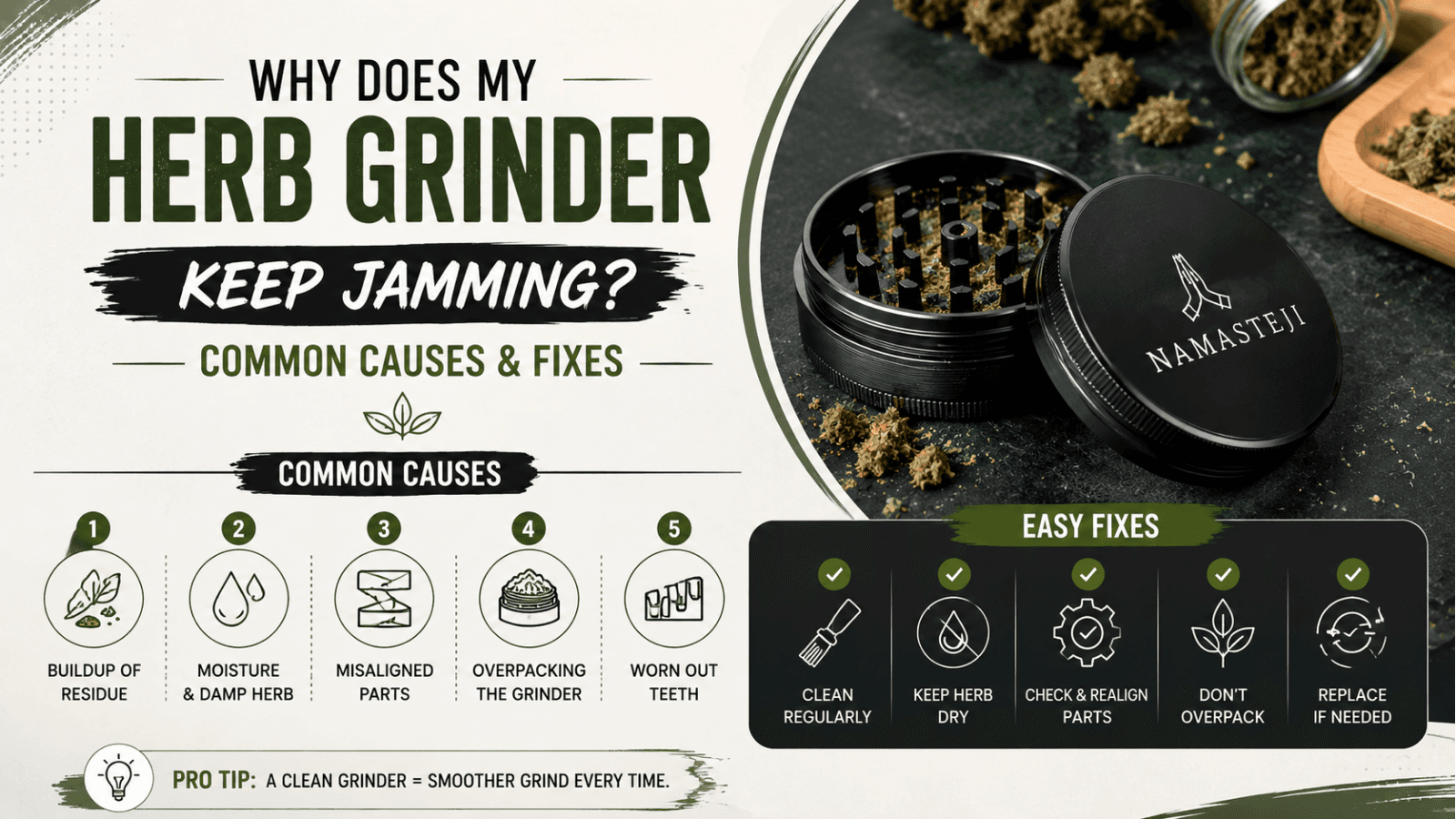
A grinder that won't turn, sticks halfway, or grinds unevenly is one of the most common frustrations customers run into - and almost always, it's fixable in under five minutes once you know what's actually causing it. Here are the five most common culprits, in order of how often they come up.
1. Overfilling the Chamber
This is by far the most common cause of jamming. Grinders are designed to work with a moderate amount of material between the teeth - packing the chamber too full leaves no room for the teeth to actually move past each other, and the lid simply locks up.
The fix: use roughly half to two-thirds of the chamber's capacity per load. If you're regularly overfilling, you likely need a larger grinder, not a different technique.
2. Material That’s Too Moist or Sticky
Damp or resinous material clumps together instead of breaking apart cleanly, gumming up the teeth and chamber walls. This is especially common with very fresh material that hasn't dried sufficiently.
The fix: let material dry out slightly before grinding, and avoid forcing the lid if you feel resistance - forcing it tends to compact sticky material further rather than breaking it apart.
3. Kief Buildup in the Lower Chamber
On 4-part grinders with a kief catcher, fine powder can build up around the mesh screen over time, blocking airflow and movement between chambers. This buildup happens gradually, so it's easy to miss until the grinder suddenly feels stiff.
The fix: empty the kief chamber regularly and brush around the mesh screen with a small cleaning brush - a build-up of more than a few millimetres is usually the point where movement starts to suffer.
4. Worn, Bent, or Misaligned Teeth
Over time and with heavy use, grinder teeth can bend slightly or wear down unevenly, especially on lower-cost plastic or thin-metal models. Once the teeth no longer interlock cleanly, the grinder will catch or jam at the same point on every rotation.
The fix: check for visible bending or wear by turning the grinder empty - if it catches at the same point every time even when empty, the teeth themselves are the problem, not the material inside.
5. Residue and Resin Buildup on the Threading
Sticky residue doesn't just affect the grinding teeth - it can also build up on the threaded edges where the lid screws onto the body, making the grinder feel stiff or difficult to twist open and closed.
The fix: a soft brush such as a Grinder Cleaning Brush, combined with a small amount of isopropyl alcohol on the threading (left to dry fully before reassembling), typically clears this without damaging the grinder.
Retail Insight: a meaningful share of grinder return requests are not actually faulty products - they're one of these five issues. A quick troubleshooting conversation at the till, or a printed card in the bag with new grinder purchases, reduces unnecessary returns and builds customer trust in your shop.
When It’s Not a Fix - It’s Time for a New Grinder
If a grinder still jams consistently after cleaning, drying material properly, and checking for worn teeth, the grinder itself has likely reached the end of its useful life - particularly common with entry-level plastic grinders after heavy daily use.
Stepping up to a 4-Part Metal Herb Grinder with Kief Catcher typically resolves persistent jamming for customers who've outgrown a plastic model.
An Electric Herb Grinder removes the manual-turning issue entirely for customers who jam grinders frequently through overfilling.
For a full breakdown of which grinder type suits which customer, see our guide: Metal vs Plastic vs Electric Herb Grinders: Which Should UK Retailers Stock?. Browse the full wholesale herb grinders range.
Frequently Asked Questions - Grinder Jamming - User Guide
Q1: Why is my grinder stuck and won't turn at all?
Overfilling is the most common cause - try emptying it and adding back a smaller amount.
If it still won't turn empty, check for bent teeth or built-up residue on the threading, both of which can cause a grinder to lock up completely.
Q2: Can I use a knife or tool to force my grinder open?
Avoid this - forcing a jammed grinder with a tool risks bending the teeth or stripping the threading.
It's safer to try gentle twisting with light pressure, or take the grinder apart from the base if your model allows it, rather than applying force from the top.
Q3: Why does my grinder work fine sometimes and jam other times?
This usually points to moisture in the material rather than a fault with the grinder itself.
Material that's slightly too fresh or damp on a given day will grind less cleanly than the same material once it's dried out a little more.
Q4: How often should I clean my herb grinder?
Most grinders benefit from a light clean every one to two weeks with regular use.
Kief and resin buildup happens gradually, so a quick brush-out on a regular schedule prevents the kind of heavy buildup that eventually causes jamming.
Q5: Is it normal for a grinder to feel stiff when new?
A small amount of initial stiffness is normal and usually loosens up after the first few uses.
New grinders sometimes have very slightly tight tolerances between teeth, which settle in with light use.
Q6: Why does my 4-part grinder feel harder to turn than my old 2-part one?
4-part grinders have more moving sections and a mesh screen, which adds slightly more resistance than a simple 2-part design.
This is normal, but it also means a 4-part grinder needs more regular cleaning to stay smooth, since there's more surface area for kief and resin to build up on.
Q7: Can I wash my metal grinder with water?
Yes, most metal grinders can be cleaned with warm water, though a full soak isn't usually necessary for routine cleaning.
Make sure the grinder is completely dry before reassembling, since trapped moisture can encourage residue to clump rather than clear out.
Q8: Why does my grinder catch at the same spot every time?
This points to a bent or worn tooth rather than a material issue.
If the catch happens even when the grinder is completely empty, the issue is mechanical rather than something a clean will fix.
Q9: Should I oil or lubricate my grinder?
This isn't generally recommended for grinders used with anything you intend to consume.
A thorough clean to remove residue buildup is the safer and more effective way to restore smooth movement.
Q10: How do I know if I need a new grinder instead of cleaning my current one?
If jamming continues after a full clean, drying your material, and checking for bent teeth, the grinder has likely reached the end of its usable life.
This is especially common with budget plastic grinders after months of regular use - stepping up to a metal or electric model usually solves it for good.
Frequently Asked Questions - For Retailers & Trade Buyers
Q1: What's the most common reason customers return a herb grinder?
Perceived jamming is one of the most common return reasons, but it's frequently a usage issue rather than a product fault.
Overfilling and material moisture account for the majority of jamming complaints, which means a brief in-store explanation at the point of sale can meaningfully reduce return rates.
Q2: Should I include care instructions with grinder purchases?
Yes - a simple printed card covering fill levels and basic cleaning reduces avoidable returns.
Most jamming complaints stem from a small number of predictable causes, so proactive guidance at the point of sale is one of the lowest-cost ways to cut down on return requests.
Q3: Does grinder material affect how often customers report jamming?
Yes - entry-level plastic grinders are reported as jamming more frequently than metal models, particularly with heavy use.
This is a useful upsell point: customers who've had a plastic grinder jam repeatedly are good candidates for a metal or electric upgrade.
Q4: Is there a margin opportunity in grinder cleaning accessories?
Yes - cleaning brushes are a low-cost, high-margin add-on that pairs naturally with grinder sales.
Positioning a cleaning brush alongside grinders at the point of sale increases basket value while genuinely reducing the chance of a return down the line.
Q5: Should I recommend electric grinders to customers who complain about jamming?
Yes, particularly for customers who describe overfilling as a recurring habit.
Electric grinders remove the manual fill-and-turn step that causes most jamming complaints, making them a sensible upsell for customers who've had repeated issues with manual models.
Q6: How can I reduce grinder-related customer service time in my shop?
A short, consistent explanation of fill levels and basic cleaning at the point of sale is the most effective approach.
Since the same handful of causes account for most jamming complaints, training till staff to recognise and explain them quickly cuts down on lengthy in-store troubleshooting conversations.
Q7: Do 4-part grinders generate more complaints than 2-part grinders?
Slightly, mainly due to kief chamber buildup if customers don't clean them regularly.
This isn't a reason to avoid stocking 4-part grinders - they remain a strong margin product - but it's worth mentioning basic kief chamber maintenance when customers purchase one.
Q8: Should I offer a returns policy specifically for grinders?
A standard fair-use returns policy is usually sufficient, provided staff can identify usage-related jamming versus genuine manufacturing faults.
Most jamming issues resolve with basic troubleshooting, so a brief in-store check before processing a return often resolves the customer's issue without needing a full return.
Q9: Is grinder jamming a reason to avoid stocking budget plastic models?
Not necessarily - budget grinders still serve price-sensitive customers well, provided expectations are set clearly at purchase.
Plastic grinders remain a useful entry-level SKU; the key is making sure customers understand basic care, since plastic teeth wear faster than metal under heavy use.
Q10: Where can I buy a wholesale range of grinders less prone to jamming complaints?
Namasteji's metal and electric grinder ranges are built to a more durable standard than typical budget plastic models.
Stocking a mix of durable metal options alongside entry-level plastic gives customers a clear upgrade path if they experience recurring jamming issues.


Related Posts