How to Choose a Smoking Pipe: Glass, Metal, Wood & Acrylic Explained | Namasteji
How to Choose a Smoking Pipe: Glass, Metal, Wood & Acrylic Explained
A hand pipe is one of the simplest, most portable, and most satisfying ways to smoke. Unlike a bong, a pipe requires no water, no setup, and almost no preparation - you load it, light it, and go. But with glass, metal, wooden, and acrylic options available in UK smoke shops, choosing the right type for your needs takes a little knowledge. Namasteji supplies UK smoke shops, headshops, and convenience stores with a full wholesale range of smoking pipes - including glass smoking pipes, metal pipes, wooden pipes, and cigar pipes.
What Are the Different Types of Smoking Pipe?
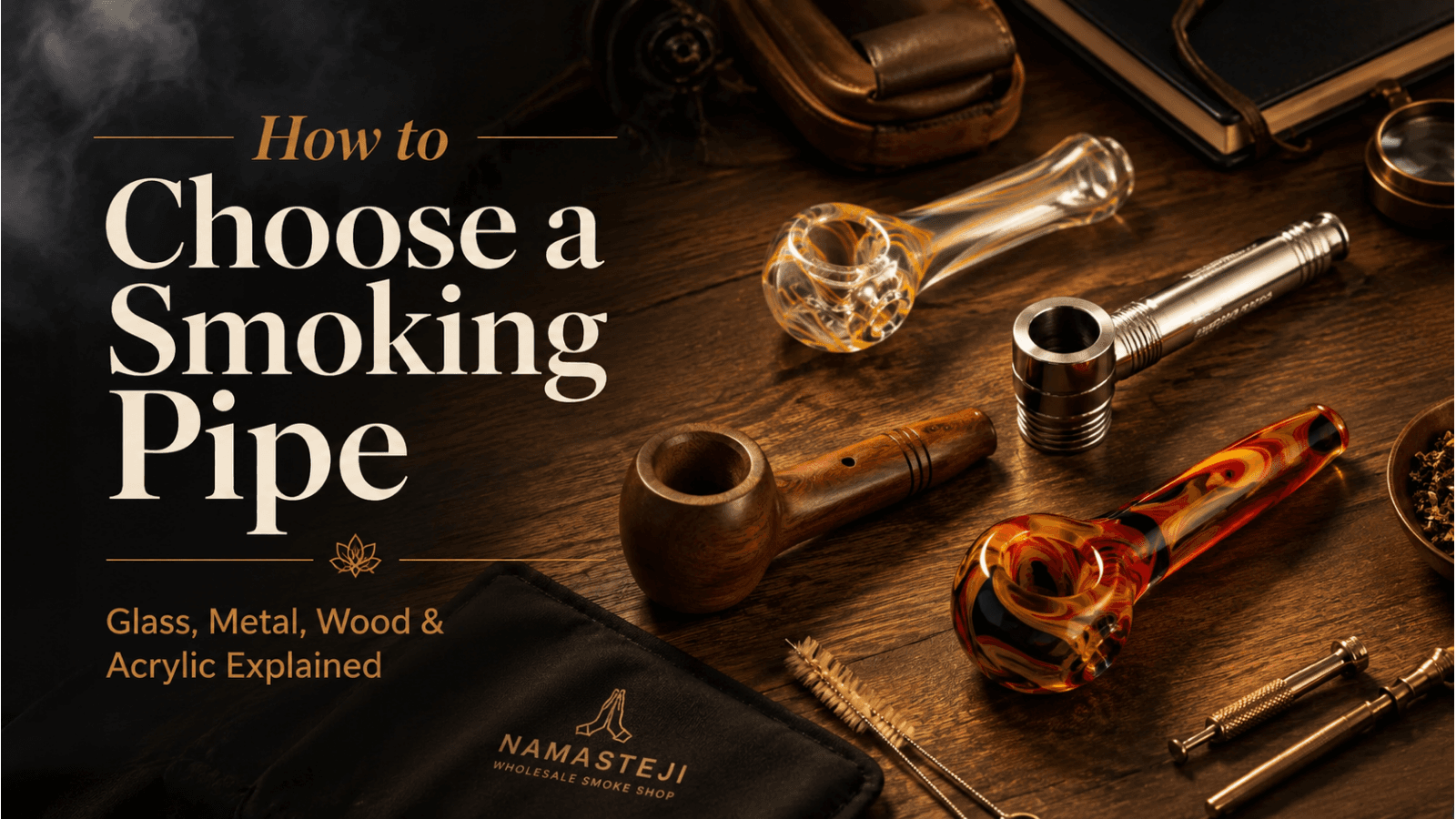
Smoking pipes come in four main materials - each with its own character, advantages, and ideal use case. Understanding the differences is the key to choosing correctly.
Glass Smoking Pipes - Purest Flavour
Glass pipes are the most popular choice in UK smoke shops for one primary reason: the glass is chemically inert, meaning it adds absolutely nothing to the flavour of your smoke. What you taste is purely your material. Glass Smoking Pipe options range from simple spoon pipes to elaborately worked hand pipes, and they are widely available at smoke shops in London, Birmingham, Manchester, and most UK cities.
Advantages: purest flavour, easy to see when dirty, beautiful aesthetic, wide variety of designs
Disadvantages: fragile - can break if dropped; heavier than metal options
Best for: home use, daily smokers who prioritise taste, collectors
Metal Smoking Pipes - Durable and Portable
Metal pipes are virtually indestructible and extremely portable - the ideal choice if you need a pipe that travels well. Metal Smoking Pipe options are typically made from aluminium or stainless steel and are available at lower price points than glass. The material does impart a slight metallic taste, particularly in cheaper models - higher-quality stainless steel minimises this.
Advantages: virtually unbreakable, very portable, affordable, discreet
Disadvantages: slight metallic taste; gets hot during extended sessions
Best for: outdoor use, travel, budget-conscious buyers, beginners
Wooden Pipes - Traditional and Aromatic
Wooden pipes have been used for centuries and carry a classic, traditional character that many smokers find deeply satisfying. Wooden Smoking Pipe options are typically made from briar, olivewood, or cherry wood. The wood absorbs and slightly influences the flavour of the smoke over time, creating a unique, mellow character that many experienced pipe smokers appreciate.
Advantages: traditional aesthetic, unique flavour character, comfortable to hold, good heat insulation
Disadvantages: requires more maintenance than glass or metal; can char if not broken in properly
Best for: tobacco smokers, traditional enthusiasts, casual use
Acrylic Pipes - Budget-Friendly Starter Option
Acrylic pipes are the most affordable option and widely available as starter pieces. They are durable, lightweight, and available in a wide range of colours. The material does affect flavour more noticeably than glass or quality metal - but for a first pipe or a low-cost everyday option, acrylic delivers a perfectly functional experience.
Hand Pipe Anatomy: What Are the Parts Called?
Understanding the parts of a pipe helps you use and maintain it properly, and makes it easier to describe what you are looking for in a shop.
Bowl - the rounded chamber at the top of the pipe where your herbs or tobacco are loaded and burned
Carb hole (carburetor) - a small hole on the side of most hand pipes; covering and releasing it controls airflow and determines how the smoke builds and releases
Stem - the body of the pipe connecting the bowl to the mouthpiece; longer stems allow more cooling before the smoke reaches your mouth
Mouthpiece - the end of the pipe through which you draw the smoke
Beginner Tip: When using a hand pipe with a carb hole, cover the carb with your thumb while lighting and drawing to fill the pipe with smoke. When ready to clear the pipe, release the carb - this allows fresh air in and draws the smoke cleanly through to the mouthpiece.
How to Use a Smoking Pipe: Step-by-Step
Grind your herbs. A medium grind works best for most hand pipes - not too fine (it falls through) and not too coarse (it burns unevenly). A 2-part or 4-part grinder produces the ideal consistency.
Pack the bowl. Load ground herbs into the bowl loosely at the bottom and slightly tighter at the top. This layering technique (loose at base, firmer at top) helps ensure an even burn and good airflow from the first draw.
Cover the carb and light. Place your thumb over the carb hole (if your pipe has one). Light the edge of the packed bowl - not the centre - while drawing gently. Lighting the edge preserves more material for subsequent draws.
Draw slowly. Draw slowly and steadily. Pulling too hard overheats the bowl and gives a harsher smoke. A gentle, steady draw gives the best result.
Release the carb to clear. When ready, release the carb hole. This draws fresh air through the pipe and clears the remaining smoke cleanly.
Tap out and clean. After each session, tap out the spent material (dottle) and give the pipe a quick clean with a pipe cleaner or cotton bud. Regular cleaning maintains flavour and prevents resin buildup.
Pipe Tip: Never leave a partially smoked bowl sitting in the pipe for extended periods - the stale residue significantly affects the taste of the next session. Always empty and tap out after use.
How to Clean a Smoking Pipe
Regular cleaning is essential for maintaining good taste and smooth draws. The cleaning method varies by material.
Glass Pipes - Isopropyl Alcohol Method
Place the glass pipe in a resealable bag with isopropyl alcohol (90%+) and coarse salt
Seal the bag and shake vigorously for 30–60 seconds - the salt acts as an abrasive
Soak for 20–30 minutes for heavy buildup
Rinse thoroughly with warm water until completely clear of alcohol
Air dry completely before use
Metal and Acrylic Pipes
Disassemble where possible. Use pipe cleaners (long flexible brushes) to run through the stem. For metal pipes, warm soapy water and a pipe cleaner works well. For acrylic, avoid isopropyl alcohol - use warm soapy water only.
Wooden Pipes
Run a pipe cleaner through the stem after each session. For deeper cleaning, use a pipe tool to remove carbon cake buildup from the bowl. Do not use water on a wooden pipe - it can warp and crack the wood. Specialist pipe cleaning fluids are available from tobacco shops.
Cleaning Frequency: For glass pipes, clean thoroughly every week for regular use. Metal pipes benefit from a quick pipe-cleaner run after every session. Wooden pipes need gentle maintenance after every use to preserve the wood.
Find smoking pipes near you at smoke shops across the UK - including London, Birmingham, Manchester, Leeds, and Bristol. Browse our full wholesale smoking pipes UK range.
Frequently Asked Questions - Smoking Pipes - User Guide
Q1: What type of smoking pipe is best for beginners?
A metal or acrylic hand pipe is the most practical starting point for beginners.
Metal and acrylic pipes are affordable, virtually unbreakable, and require minimal maintenance - all important for someone still learning. Once you are comfortable with the basics of how a pipe works, upgrading to glass gives you the best flavour experience. Many smokers keep a metal pipe for travel and a glass pipe for home use.
Q2: What is the difference between a glass pipe and a metal pipe?
Glass pipes deliver purer flavour; metal pipes are more durable and portable.
Glass is chemically inert - it adds nothing to the taste of your smoke. Metal pipes (particularly lower-quality aluminium) can impart a slight metallic note, especially when hot. For flavour purity, glass wins. For durability and travel, metal wins. Most regular pipe smokers end up with both for different situations.
Q3: How do I use the carb hole on a hand pipe?
Cover the carb while drawing to fill the pipe with smoke; release it to clear the smoke cleanly.
The carb hole (small hole on the side of most hand pipes) controls airflow. Covering it with your thumb while drawing allows smoke to build in the pipe. Releasing your thumb draws fresh air through the pipe and delivers the accumulated smoke cleanly to your lungs. Most beginners find it intuitive within the first few sessions.
Q4: Are wooden smoking pipes good for beginners?
Wooden pipes are best suited to tobacco smokers with some experience rather than complete beginners.
Wooden pipes have a learning curve - they need to be broken in gradually, require specific cleaning methods, and can char if smoked too hot or too frequently early on. They are excellent once you understand them and particularly well-suited to tobacco use. For herb smokers, glass or metal is a more accessible starting point.
Q5: How often should I clean my glass pipe?
Tap out spent material after every session; deep clean with isopropyl alcohol weekly.
A quick tap-out and wipe after every session prevents heavy buildup. A full isopropyl alcohol and salt clean once a week (for daily users) maintains excellent flavour and smooth draws. Glass pipes that are cleaned regularly are significantly more enjoyable to use than neglected ones.
Q6: Where can I find smoking pipes near me in the UK?
Smoking pipes are available at dedicated smoke shops and headshops across the UK.
Dedicated smoke shops and headshops in London, Birmingham, Manchester, Leeds, and Bristol carry the widest range of glass, metal, and wooden pipes. Some newsagents carry basic metal pipes. Online retailers offer the broadest selection with fast UK delivery.
Q7: What is a spoon pipe?
A spoon pipe is the most common hand pipe shape - a simple bowl connected by a stem, shaped like a spoon.
The spoon pipe is the most widely available and widely used hand pipe design. Its simple shape makes it easy to use and clean. The bowl sits at one end, the carb hole is typically on the left side of the bowl, and the mouthpiece is at the other end. Available in glass, metal, acrylic, and sometimes wood.
Q8: Do glass pipes break easily?
Glass pipes are fragile and will break if dropped on hard surfaces - handle with care.
Borosilicate glass (used in quality glass pipes) is heat-resistant and harder than standard glass, but it will crack or shatter if dropped. Store your glass pipe carefully when not in use and avoid leaving it on the edge of surfaces where it can be knocked. Many glass pipe owners keep a small carrying pouch for their piece.
Q9: Can I use a smoking pipe for tobacco?
Yes - hand pipes work for both herbs and tobacco.
Hand pipes are suitable for both loose herbs and loose tobacco. Wooden pipes are particularly associated with tobacco use and are designed for it. Glass and metal pipes work equally well for both. Tobacco burns differently from herb - it requires a lighter, more frequent relighting and tends to produce a wetter smoke that requires more frequent cleaning.
Q10: What size bowl is best for a hand pipe?
Medium bowl size suits most everyday users - small bowls for light sessions, large for heavier use.
Bowl size determines how much material you can pack for a single session. Small bowls (personal use, lighter sessions), medium bowls (everyday use, one to two people), large bowls (social use, sharing). Most hand pipes available in UK shops are medium-sized, which suits the majority of everyday smokers.
🏪 RETAILER STOCKING GUIDE - WHOLESALE UK
What Pipe Buyers Mean for Your Retail Range
A customer buying a hand pipe is an accessories customer who is also in the market for a grinder, a lighter, rolling papers, and filter tips. Pipes are rarely a standalone purchase - they are part of a smoking setup. Understanding this means positioning your pipe display near your rolling accessories to capture the full basket spend from every pipe buyer.
Glass pipes are your premium range and your strongest margin product. Metal and acrylic pipes are your entry-level volume products - they bring customers into the pipe category who may upgrade to glass later. Wooden pipes serve the tobacco smoker segment and gift market. Ranging all three materials ensures you satisfy every pipe customer regardless of budget or preference.
Retail Insight: Customers who buy glass pipes are typically your most engaged, highest-spending accessories customers. They care about their smoking experience and are likely to invest in a quality grinder, premium rolling papers, and quality accessories. Position glass pipes prominently to signal to this customer that your shop understands their preferences.
Why Smoking Pipes Are a Strong Addition to Any UK Accessories Range
Multiple materials = multiple price points - from £2 acrylic starter pipes to £25+ worked glass pieces, there is a pipe sale for every customer budget
High impulse purchase rate - pipes are small, affordable, and often bought on impulse - a well-displayed glass pipe section generates significant add-on spend
Gifting appeal - worked glass pipes are strong gift products; artistic designs appeal to customers buying for others
Basket building - pipe buyers almost always purchase a grinder, a lighter, and papers in the same visit
Pipe cleaners as recurring revenue - every pipe owner needs pipe cleaners; stocking them generates reliable repeat spend
Quick Summary for Retailers
Retailer Buying Guide
Three material tiers: glass as your core and premium range (widest selection, best margin), metal as your entry-level and travel range (one or two options), and wood as your traditional and gift option. Always stock pipe cleaners directly alongside your pipe display - every pipe owner needs them and they are a reliable high-margin add-on sale.
Browse our full wholesale smoking pipes & bongs UK range - all materials and styles at competitive trade prices with fast UK delivery.
Browse our range: Wholesale Bongs & Pipes UK
Related guides: Glass Bong vs Acrylic Bong | Top-Selling Bong & Pipe Types in UK Smoke Shops
Frequently Asked Questions - For Retailers & Trade Buyers
Q1: Which smoking pipe material sells best in UK smoke shops?
Glass smoking pipes are the bestselling material by value in most UK smoke shops.
Glass pipes dominate in smoke shops and headshops that serve regular herb smokers. Metal and acrylic pipes lead in volume at lower price points, particularly in convenience stores and basic smoke shops. Wooden pipes sell consistently in shops that serve tobacco smokers.
Q2: Should I stock all pipe materials?
Stock glass as your core range, metal as budget/travel option, and wood as the traditional/gift option.
Covering all three materials ensures you can satisfy every pipe customer. Glass is your margin anchor. Metal and acrylic serve budget-conscious and travel-oriented customers. Wooden pipes serve the tobacco smoker and gift buyer segment. Each serves a distinct need.
Q3: What margin can retailers expect on glass pipes?
Glass pipes carry strong retail margins, particularly worked and premium designs.
Basic glass spoon pipes carry moderate margin. Worked, coloured, or artisan glass pipes carry significantly stronger per-unit margin at wholesale trade prices. Premium glass pipes are also strong gifting products, giving you two routes to the sale - smoking accessory and gift item.
Q4: Are pipe cleaners worth stocking alongside pipes?
Yes - pipe cleaners are a high-margin, high-frequency repeat purchase from every pipe owner.
Every pipe owner uses pipe cleaners regularly. They are inexpensive at wholesale, carry strong retail margin, and require minimal display space. Displaying them directly alongside your pipe range captures this purchase naturally and adds consistent recurring revenue from your pipe-buying customers.
Q5: How should smoking pipes be displayed?
Display glass pipes at eye level with clear material and style segmentation.
Glass pipes benefit from being displayed where their aesthetic can be appreciated - eye level, well-lit, with clear signage distinguishing between basic spoon pipes and premium worked designs. Metal pipes can be grouped as the practical, portable option. Pipe cleaners displayed alongside pipes naturally captures the companion purchase.
Q6: Do smoking pipes make good gift products?
Yes - worked glass pipes and wooden pipes are strong gift products.
Artistically worked glass pipes in interesting designs and colours are popular as gifts among smokers. Wooden pipes have a classic, premium feel that translates well to the gift market. Both categories perform well during key gifting periods and for birthdays and personal occasions.
Q7: Should I stock cigar smoking pipes?
Yes - cigar pipes serve a distinct customer segment and add useful range diversity.
Cigar pipes appeal to cigar smokers who want a hands-free smoking experience. They are a distinct product from herb pipes and serve a different customer. Stocking one or two cigar pipe options adds visible range depth and captures spending from a customer who might otherwise not find what they need in your shop.
Q8: What pipe accessories should I stock?
Pipe cleaners, pipe tools, and screens (gauzes) are the key pipe accessories.
Pipe cleaners are the highest-priority accessory - every pipe owner uses them regularly. Pipe tools (a small multi-function tool for tamping, reaming, and picking) are useful for tobacco pipe users. Pipe screens (filter gauzes) are used in some pipes to prevent ash and material from being drawn through - a high-margin, regular-purchase item.
Q9: Are acrylic pipes worth stocking?
Yes - acrylic pipes serve the budget-conscious and beginner segment.
Acrylic pipes are the most affordable option and serve customers who want a functional pipe at a low price point. They are not your margin leader but they ensure you have something for every customer budget and prevent budget-conscious customers from going elsewhere.
Q10: How do I order wholesale smoking pipes from Namasteji?
Browse and order all pipe types online at namasteji.co.uk.
Glass smoking pipes, metal pipes, wooden pipes, acrylic pipes, and cigar pipes are all available at namasteji.co.uk/product-category/bong-pipes. For trade queries, contact info@namasteji.co.uk or call +44 208 907 0022.


Related Posts