How to Clean a Herb Grinder Without Damaging the Threads | Namasteji
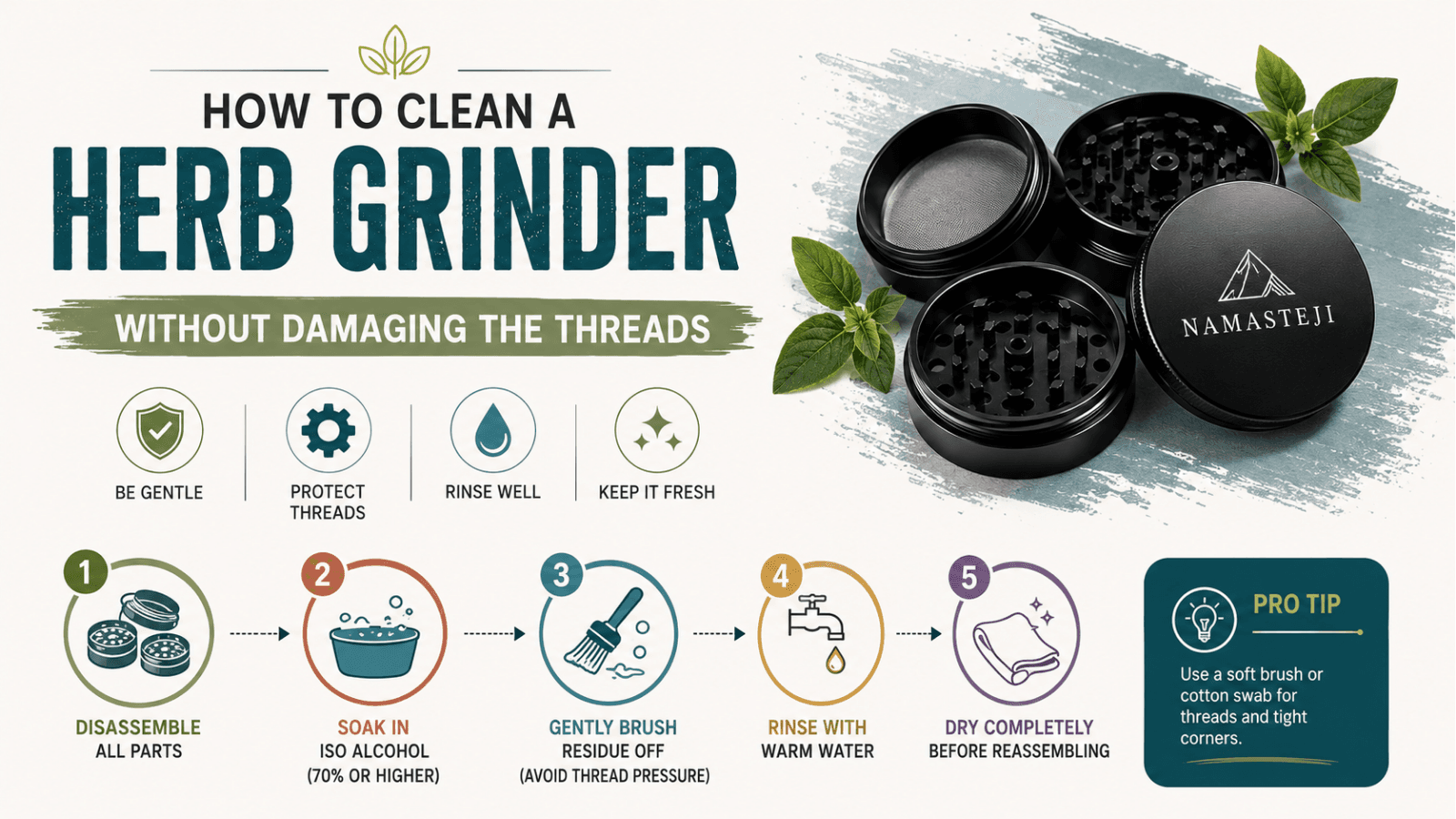
The threading where a grinder's lid screws onto its body is the single most common part to get damaged during cleaning - not from use, but from the cleaning process itself. Scrubbing too hard, using the wrong tool, or letting moisture sit on the threads for too long can strip them or cause the lid to feel loose. Here's a cleaning method that avoids all three.
Step-by-Step: Cleaning a Grinder the Safe Way
Disassemble fully. Separate every section - lid, grinding chamber, mesh screen, and kief chamber if your grinder has one. Cleaning a grinder assembled is how most threading damage happens, since moisture and grit get trapped at the joint.
Brush off loose material first. Use a soft-bristle Grinder Cleaning Brush to remove loose herb and debris before introducing any liquid - this prevents grit from turning into an abrasive paste once it gets wet.
Soak metal parts in isopropyl alcohol. A short soak (10–15 minutes) breaks down resin without needing aggressive scrubbing. This step is for metal grinders - see the warning below for plastic and acrylic models.
Clean the threading separately and gently. Use the soft brush specifically on the threaded edge, with light pressure only. The threading is a precision-fit part; it needs cleaning, not scrubbing.
Rinse and dry completely before reassembling. Trapped moisture on the threading is a common cause of grinders feeling stiff or sticky shortly after cleaning. Let every part air-dry fully, ideally overnight, before screwing it back together.
The threading is the part of a grinder most likely to be damaged by well-meaning over-cleaning. Treat it gently and separately from the grinding teeth - a soft brush and patience, not scrubbing pressure, is what protects it.
Three Mistakes That Damage Threading
Using a wire brush or metal scourer. These are too abrasive for threading and can scratch or strip the fine grooves that let the lid screw on smoothly.
Soaking plastic or acrylic grinders in isopropyl alcohol. Alcohol can affect certain plastics and coatings over repeated exposure - for plastic grinders, warm water and a mild soap is the safer choice.
Forcing a stiff lid after cleaning. If the lid feels tight after a clean, it's almost always residual moisture, not damage - let it dry fully rather than forcing the thread, which is how stripping actually happens.
How Often Should You Clean a Grinder?
A light clean every one to two weeks with regular use keeps resin and kief from building up to the point where a deeper clean becomes necessary. Grinders cleaned little and often last noticeably longer - and keep smoother threading - than ones left for months between cleans and then scrubbed aggressively.
A well-maintained 4-Part Anodised Metal Herb Grinder can easily outlast several cheaper grinders if the threading is looked after properly. For background on grinder materials and which type holds up best to regular cleaning, see our guide: Herb Grinders Wholesale Guide: Types, Materials & Best Sellers for UK Retailers. Browse the full wholesale herb grinders range.
Frequently Asked Questions - Grinder Cleaning & Threading Care - User Guide
Q1: Can I put my metal grinder in isopropyl alcohol?
Yes - a short 10–15 minute soak in isopropyl alcohol is safe and effective for metal grinders.
Alcohol breaks down resin without the need for aggressive scrubbing, which is gentler on the threading than scouring with an abrasive tool.
Q2: Why does my grinder lid feel loose after cleaning?
This is usually residual moisture rather than actual thread damage - let it dry fully and check again.
Moisture trapped between threaded surfaces can make a lid feel slightly different until it's completely dry, after which the fit usually returns to normal.
Q3: Can I clean a plastic grinder the same way as a metal one?
Not exactly - use warm water and mild soap for plastic grinders rather than isopropyl alcohol.
Alcohol can affect some plastics and coatings over repeated use, so a gentler water-based clean is the safer choice for plastic and acrylic models.
Q4: How do I clean the threading on my grinder without damaging it?
Use a soft-bristle brush with light pressure, cleaned separately from the grinding teeth.
The threading is a precision-fit part, so it needs gentle attention rather than the firmer scrubbing you might use on the grinding teeth themselves.
Q5: Should I dry my grinder before putting it back together?
Yes - let every part fully air-dry before reassembling.
Reassembling while parts are still damp is one of the most common causes of a grinder feeling stiff or sticky shortly after cleaning.
Q6: Can I use a toothbrush to clean my grinder?
Yes, a soft-bristle toothbrush works well for both the teeth and the threading.
It's gentle enough not to scratch fine threading while still being firm enough to dislodge resin and kief buildup.
Q7: Why shouldn't I use a wire brush on my grinder?
Wire brushes are too abrasive and can scratch or strip the fine grooves in the threading.
Once threading is scratched or worn, the lid no longer screws on as smoothly, which can lead to the jamming or stiffness people often try to clean their way out of.
Q8: How long should I soak my grinder in cleaning solution?
10 to 15 minutes is usually enough for a routine clean.
Longer soaking isn't necessarily more effective and can be unnecessary for a grinder that's cleaned regularly rather than left for months between cleans.
Q9: Is it bad to force a stiff grinder lid open?
Yes - forcing a stiff lid is one of the most common ways threading actually gets damaged.
Stiffness after cleaning is almost always residual moisture, so letting it dry fully is safer and more effective than applying force.
Q10: How often should I deep clean my grinder versus just brushing it out?
A light brush-out works well between uses, with a fuller alcohol or soap clean every one to two weeks.
This rhythm prevents heavy buildup from ever forming, which is what usually leads people to scrub harder than the threading can comfortably handle.
Frequently Asked Questions - For Retailers & Trade Buyers
Q1: Does grinder material affect cleaning instructions retailers should give customers?
Yes - metal grinders can be cleaned with isopropyl alcohol, while plastic and acrylic models need a gentler water-based approach.
Mentioning this distinction at the point of sale helps prevent customers damaging plastic grinders with a cleaning method better suited to metal.
Q2: Can poor cleaning advice lead to more grinder returns?
Yes - customers who damage threading through incorrect cleaning sometimes return the grinder believing it's faulty.
A brief, correct cleaning explanation at the point of sale reduces this category of return, since the issue is almost always cleaning method rather than a manufacturing fault.
Q3: Should I sell cleaning brushes specifically marketed for grinder threading?
Yes - a dedicated soft-bristle brush is a natural, low-cost add-on to any grinder sale.
It gives customers the right tool for the job rather than reaching for something more abrasive at home, which protects the product and reduces damage-related complaints.
Q4: Do anodised metal grinders need different cleaning care than plain metal ones?
Yes - anodised coatings can wear with overly abrasive cleaning, so a soft brush is particularly important.
This is worth mentioning to customers buying premium anodised or coloured-coating grinders, since the coating is part of what they're paying extra for.
Q5: Is grinder maintenance content useful for SEO beyond just answering customer questions?
Yes - maintenance and care content is an underused but consistently searched topic in this category.
Very few competitors publish proper care guidance, which makes this a relatively easy area to build search visibility and AEO presence.
Q6: Should care instructions differ between 2-part and 4-part grinders?
The core threading advice is the same, but 4-part grinders also need attention to the mesh screen and kief chamber.
It's worth mentioning both areas to customers buying a 4-part model, since kief chamber buildup is a separate maintenance point from the main threading.
Q7: Can I offer a printed care card with grinder purchases?
Yes - a simple printed card covering disassembly, cleaning, and drying is a low-cost way to extend product lifespan.
Since most damage comes from incorrect cleaning rather than normal wear, clear instructions at the point of sale directly protect the value of what the customer just bought.
Q8: Does proper care information reduce warranty or replacement requests?
Yes, in cases where a customer would otherwise have damaged the grinder through aggressive cleaning.
Replacement and warranty requests linked to thread damage are largely avoidable with the right guidance given at purchase.
Q9: Is there a margin opportunity tied to grinder maintenance accessories?
Yes - cleaning brushes and grinder-specific cleaning solution are low-cost, high-margin additions to a grinder sale.
Positioning these alongside your grinder range at the point of sale increases basket value while genuinely extending the life of the product the customer is buying.
Q10: Where can I source grinders and matching cleaning accessories wholesale?
Namasteji supplies metal, plastic, and electric grinders alongside dedicated cleaning brushes for UK trade buyers.
Ordering both from the same supplier makes it easy to bundle the right cleaning tool with the right grinder type at the point of sale.


Related Posts