How to Clean and Maintain a Refillable Lighter | Namasteji
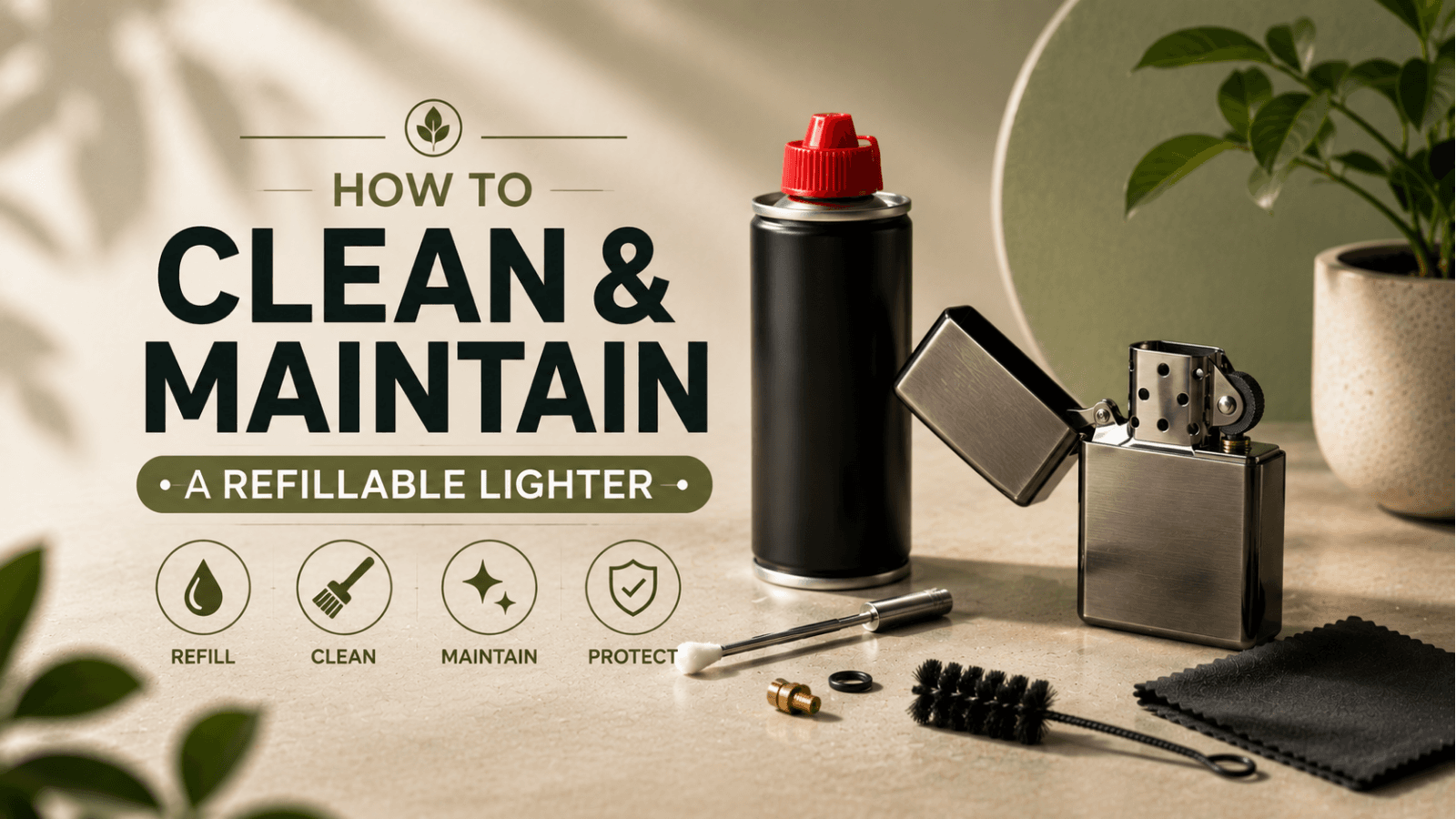
How to Clean and Maintain a Refillable Lighter?
A refillable lighter that produces a spark but no flame, lights intermittently, or leaks gas when filled almost always has a maintenance issue rather than a manufacturing fault. Here's how to diagnose and fix the most common problems - and how to keep a lighter working well for years.
Problem 1: Sparks But No Flame
The most likely causes are an empty tank, a clogged nozzle, or a misadjusted flame height.
Check the fuel level first. A lighter that's bone dry will spark reliably but produce no flame - refill with the appropriate butane gas and try again.
Clear the nozzle. Hold the lighter upside down and press the filler valve with a small tool (a pen tip or screwdriver tip works) to release any air or residual gas, then refill. This purges trapped air that prevents fuel from reaching the nozzle.
Check flame adjustment. If the flame height adjuster is turned to minimum, the flame may be too low to sustain. Turn it slightly higher and try again.
Problem 2: Flame Flickers or Goes Out Immediately
This usually points to a dirty nozzle, particularly on jet flame lighters where the precision of the nozzle matters more than on soft flame models.
The fix: use a can of compressed air or blow firmly into the nozzle opening to clear debris. If the problem persists, a small cleaning brush or a toothpick used very gently around (not inside) the nozzle opening can dislodge residue. A Lighter Cleaning Brush Set is a useful accessory for both customers and retailers who want to avoid unnecessary returns.
Problem 3: Lighter Leaks Gas When Filled
A leaking lighter is almost always an O-ring or filler valve issue. Check that the butane canister was fully inserted during refilling - a partial connection is the most common cause of what appears to be a leak. If the lighter smells of gas when not in use, stop using it and inspect the filler valve.
Problem 4: Flint-Based Lighter Produces Weak or No Spark
On flint-based lighters, a weak spark means the Replacement Lighter Flint is worn down and needs replacing. Unscrew the base of the lighter, remove the spring and old flint, insert a new flint of the correct size, and reassemble. This is a 30-second task that restores full function.
General Maintenance: Making a Good Lighter Last
Refill before completely empty. Running a lighter fully dry allows air into the fuel system, which causes the spark-but-no-flame problem more often.
Use quality butane. Low-quality butane contains impurities that clog nozzles faster. A refined triple or quadruple refined butane keeps jet flame lighters working longer.
Store horizontally. Storing a lighter upright for extended periods can cause fuel to settle unevenly.
Keep the nozzle clear. A quick blast of compressed air every few weeks on a jet flame lighter prevents the gradual buildup that causes flickering.
Retail Insight: a lighter returned as 'faulty' is more often an empty tank, an air lock, or a worn flint. Staff who can diagnose this at the till - and offer a flint replacement or demonstrate the purge-and-refill process - convert a return into a resolved issue and a satisfied customer.
Browse our wholesale lighters & flints range, including both refillable jet flame and soft flame lighters. See our full guide: Jet Flame vs Soft Flame Lighters: UK Wholesale Guide for Retailers
Frequently Asked Questions - Lighter Maintenance - User Guide
Q1: Why does my refillable lighter spark but not light?
The most likely causes are an empty tank, a trapped air lock in the fuel system, or a clogged nozzle.
Try purging the lighter by pressing the filler valve with a small tool while upside down, then refill and try again - this clears trapped air in most cases.
Q2: How do I refill a refillable lighter?
Turn it upside down, insert the butane canister nozzle firmly into the filler valve, and press down for 3–5 seconds.
Wait 30 seconds after filling before lighting to allow the gas to stabilise, and don't overfill - stop when you feel back-pressure from the valve.
Q3: Why does my lighter flame keep going out?
A flickering or self-extinguishing flame usually points to a dirty nozzle or a very low fuel level.
A blast of compressed air into the nozzle clears most debris blockages, and refilling if the tank is low often resolves the issue immediately.
Q4: How do I replace a flint in my lighter?
Unscrew the base, remove the spring and worn flint, insert a new flint of the correct size, and reassemble.
Flints are standardised in size for most common lighters - taking the old one to the shop to match size is the simplest way to get the right replacement.
Q5: How often should I replace a lighter flint?
Most flints last several hundred lights - replacement is needed when the spark becomes noticeably weaker or stops altogether.
Regular users might replace a flint every few months; occasional users may go a year or more between replacements.
Q6: Why does my lighter smell of gas when not in use?
A gas smell when the lighter is not in use suggests a filler valve or O-ring issue - stop using the lighter until it's inspected.
A small gas leak is a safety issue. Check that the filler valve isn't stuck open, and if the smell persists after inspection, the lighter should be disposed of safely.
Q7: What butane should I use to refill my lighter?
Triple or quadruple refined butane is recommended, particularly for jet flame lighters.
Lower-quality butane contains impurities that gradually block the precision nozzle in jet flame lighters, causing the flickering and blockage issues described in this guide.
Q8: Can I adjust the flame height on a refillable lighter?
Most refillable lighters have a small adjuster at the base - a small screwdriver or coin turns it to increase or decrease flame height.
If a lighter is sparking but producing very little flame, checking that the adjuster isn't set to minimum is one of the first things worth trying.
Q9: Is a lighter repairable if it doesn't work?
Most lighter problems are fixable with a refill, a flint replacement, or a nozzle clean - only persistent faults after these steps suggest a genuine component failure.
Genuine manufacturing faults are relatively rare in quality refillable lighters - most 'broken' lighters are simply empty, air-locked, or clogged.
Q10: Why does my jet flame lighter produce an orange flame instead of blue?
An orange or yellow flame on a jet lighter suggests impure butane, a partially clogged nozzle, or flame height set too high.
Switching to a refined butane and clearing the nozzle usually restores the clean blue jet flame - an orange flame means the gas isn't burning completely.
Frequently Asked Questions - For Retailers & Trade Buyers
Q1: What's the most common reason a lighter is returned as faulty?
An empty tank or an air lock in the fuel system accounts for the majority of lighter returns that aren't genuine faults.
A 30-second purge-and-refill demonstration at the till resolves most of these before they become a formal return.
Q2: Should I sell flints alongside lighters?
Yes - lighter flints are a genuine consumable and a natural low-cost add-on to any lighter sale.
Customers who buy a flint-based lighter will eventually need replacement flints, and having them available in your shop keeps that repeat purchase with you rather than sending the customer elsewhere.
Q3: Does lighter quality affect return rates?
Yes - entry-level lighters from less reliable sources generate noticeably more return requests than established brands.
Stocking from a reliable wholesale source significantly reduces the proportion of genuine faults in returned lighters.
Q4: Should I stock cleaning accessories for lighters?
A small brush or compressed air for jet flame lighter nozzles is a useful add-on for engaged customers.
It's a minor addition to the category but addresses a real maintenance need for regular jet flame lighter users.
Q5: What's the difference between advising a customer and accepting a return?
Most lighter 'faults' resolve with advice rather than a return - building this into till staff training reduces return processing time.
A member of staff who can identify empty tanks, worn flints, and air locks on sight can resolve the vast majority of lighter complaints at the counter rather than processing them as returns.
Q6: Are refillable lighters a better stock choice than disposable ones?
Refillable lighters generate a higher per-unit margin and a separate consumable (butane/flints) revenue stream that disposables don't.
Disposable lighters have their place for price-sensitive customers and high-volume impulse sales, but refillable models generate more ongoing revenue per customer relationship.
Q7: Do I need to stock multiple butane brands or just one?
One reliable refined butane brand is sufficient for most smoke shop lighter ranges.
The key is stocking a butane that's compatible with both soft flame and jet flame lighters - a triple-refined option covers both without needing multiple products.
Q8: Should I demonstrate refilling to new lighter buyers?
A brief verbal explanation is usually enough - customers who've never refilled a lighter benefit from knowing the purge step.
The purge step (pressing the filler valve while upside down before refilling) is the most commonly skipped part of the refilling process and the most frequent source of air-lock complaints.
Q9: What margin do refillable lighters carry?
Refillable lighters from established brands carry solid per-unit margin, with the ongoing consumable (butane, flints) adding to the total customer value over time.
The combined margin across a lighter sale and subsequent consumable purchases makes refillable lighters a stronger long-term margin contributor than their initial unit price suggests.
Q10: Where can I order refillable lighters and accessories wholesale in the UK?
Namasteji supplies refillable jet flame and soft flame lighters alongside flints and accessories to UK retailers.
Ordering your complete lighter range from one supplier simplifies stocking and ensures product compatibility across the range.


Related Posts