5 Rolling Paper Myths UK Retailers Should Stop Believing | Namasteji
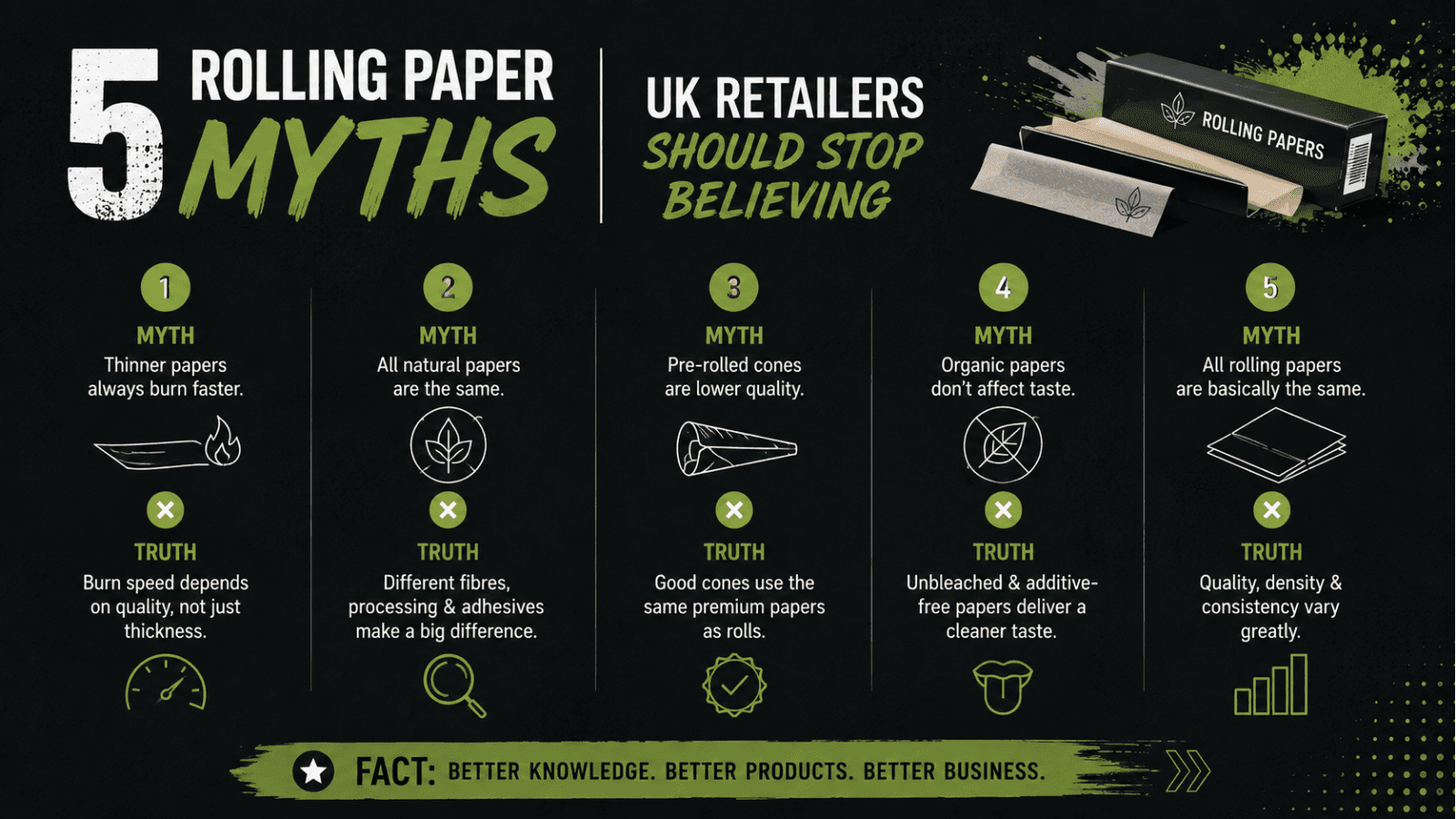
Rolling papers look like a simple category to manage - small, cheap, easy to reorder. That simplicity is exactly why a few persistent assumptions about margin, brand loyalty, and storage go unchallenged for years in a lot of UK shops. Here are five worth re-examining.
Myth 1: The Cheapest Papers Always Deliver the Best Margin
It seems intuitive: lower wholesale cost should mean a better margin. In practice, percentage margin and total profit per shelf-inch are two different things, and budget papers usually lose on the second measure.
The reality: premium and unbleached papers like RAW Organic Hemp Rolling Papers and OCB Organic Hemp Papers carry a noticeably higher RRP relative to their wholesale cost than budget brands. A shop leaning entirely on the cheapest SKU is often leaving margin on the table that a balanced range - budget, mid, and premium - would capture instead.
Myth 2: Filter Tips Are Just a Throwaway Add-On
Many retailers treat filter tips as an afterthought to the “real” product - the papers. Tips end up tucked on a lower shelf or skipped entirely, on the assumption that they don't move the needle.
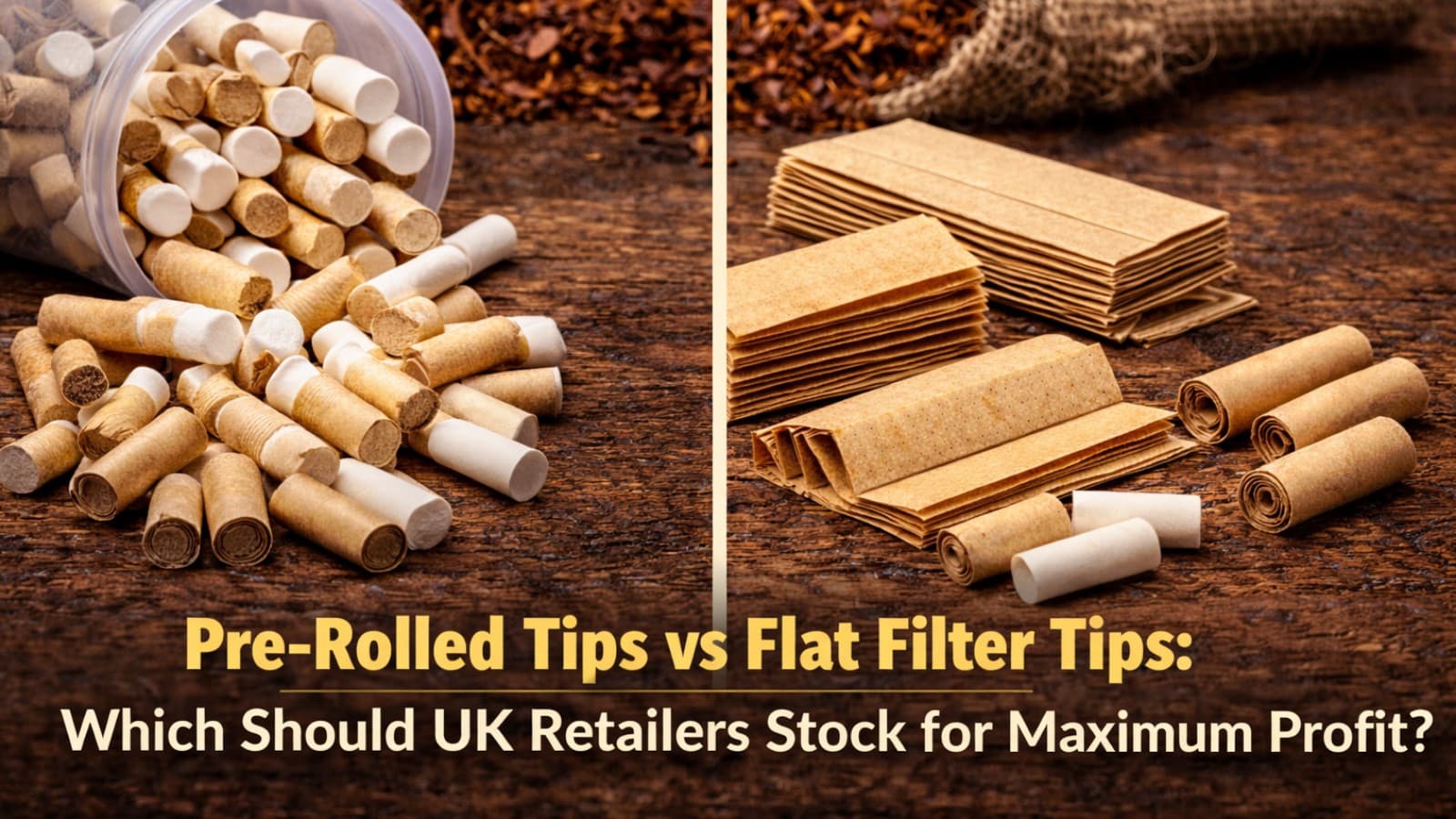
The reality: tips are a companion purchase, not a separate decision. RAW Filter Tips and Hornet Pre-Rolled Tips ranged directly alongside papers that consistently lift basket value compared to shops stocking papers alone. Skipping tips, or hiding them away from the papers, is leaving a same-visit sale on the table.
Myth 3: Customers Never Switch Rolling Paper Brands
Brand loyalty in this category is real - genuinely higher than in most retail categories - which leads some retailers to assume it's absolute: stock the one brand everyone already buys, and don't bother with the rest.
The reality: loyalty is strong to a brand tier, not necessarily one single SKU. A customer loyal to “premium, natural papers” may move between RAW and OCB Organic depending on availability, rather than being locked to one specific product. Treating loyalty as single-brand rather than tier-based means retailers under-stock the alternatives that would have captured the same sale on a day their usual brand is out of stock.
Myth 4: Rolling Papers Don’t Need Careful Storage
Because papers are cheap and small, they often get stored or displayed without much thought - stacked near a window, close to a heater, or left in damp stockroom conditions.
The reality: rolling papers are genuinely sensitive to heat, humidity, and direct light. Damp conditions can cause papers to stick together or warp, and the adhesive gum strip is particularly sensitive to humidity - a paper with a weak or unreliable gum strip is far more likely to be returned or simply not repurchased. Dry, stable storage away from direct heat and light protects stock that already has thin margins on the budget end of the range.
Myth 5: Premium and Unbleached Papers Are Just a Trend
Some retailers treat unbleached and premium papers as a niche experiment - one or two SKUs kept mostly out of completeness rather than real stocking confidence - on the assumption that “real” demand is for standard white papers.
The reality: unbleached papers have been one of the most consistently growing segments in UK wholesale for several years now, not a short-lived trend. A sensible range still leans bleached for volume - a roughly 60/40 split toward bleached is a reasonable starting point for most shops - but treating the unbleached 40% as an afterthought means under-serving a loyal, repeat-purchasing customer base that specifically seeks it out.
Retail Insight: all five of these myths share the same root cause - treating rolling papers as a simple, low-attention category because the individual unit price is low. The total annual revenue this category generates per shop is rarely small, even when each transaction is.
What to Do Instead
Range across tiers, not just the bestseller. Budget, mid, and premium brands each capture a different margin profile.
Always shelve tips next to papers. Treat them as one purchase decision, not two separate ones.
Stock at least two brands per tier where possible. Loyalty is tier-based more often than single-SKU based.
Store stock away from heat, light, and damp. Protects the gum strip and prevents avoidable spoilage.
Treat unbleached papers as a permanent range segment. Not a trial - a genuinely growing, loyal customer base.
For the full range-building reasoning behind these points, see our pillar guide: Wholesale Rolling Papers UK: Complete Guide for Retailers & Bulk Buyers. Browse the full wholesale rolling papers & tips range.
Frequently Asked Questions - For Retailers & Trade Buyers
Q1: Do cheaper rolling papers really generate worse margin?
Not in absolute terms, but they typically generate less total profit per shelf-inch than a balanced range including premium tiers.
Premium and unbleached papers carry a meaningfully higher RRP relative to wholesale cost, which a budget-only range simply can't capture.
Q2: Should filter tips get their own dedicated shelf space?
Yes - tips should be displayed directly alongside papers, not on a separate or lower shelf.
Customers buying papers are highly likely to want tips in the same visit, and shops that range them together see noticeably higher basket value.
Q3: Is brand loyalty in rolling papers really as strong as people say?
Yes, but it tends to be loyalty to a brand tier rather than one single product.
A customer loyal to premium, natural papers might move between RAW and OCB Organic depending on what's in stock, rather than being locked to one specific SKU.
Q4: Does storage really affect rolling paper quality?
Yes - heat, humidity, and direct light can all affect papers, particularly the adhesive gum strip.
Damp conditions in particular can cause papers to stick together or develop an unreliable gum strip, which increases the chance of a product being returned or simply not repurchased.
Q5: Are unbleached rolling papers still worth stocking, or has demand levelled off?
Unbleached papers remain one of the more consistently growing segments in UK wholesale, not a short-lived trend.
Treating unbleached papers as a permanent range segment rather than a trial captures a loyal, repeat-purchasing customer base that specifically seeks them out.
Q6: What's a sensible bleached-to-unbleached stocking ratio?
A roughly 60% bleached to 40% unbleached split is a reasonable starting point for most general retailers.
Shops with a more health-conscious or enthusiast customer base may find an even closer 50/50 split performs better, but starting around 60/40 avoids under-stocking either segment.
Q7: How many rolling paper brands should I stock per price tier?
Where possible, two brands per tier gives customers a fallback choice and captures tier-based loyalty more effectively than one.
If a customer's usual brand is out of stock, having a second option in the same tier keeps the sale in your shop rather than sending the customer elsewhere.
Q8: Where should rolling papers be stored in a shop or stockroom?
Away from direct heat, light, and damp - a dry, stable storage area protects both the paper and the adhesive gum strip.
This is a simple, low-cost change that protects stock quality on a category where the wholesale margin on budget lines is already thin.
Q9: Is it worth re-evaluating an existing rolling papers range that's been the same for years?
Yes - ranges built around a single bestseller often miss margin and tier opportunities that have developed since the range was first set up.
A quick review against current bleached/unbleached demand and tier coverage is a low-effort way to find margin that's currently being left on the table.
Q10: Where can I order a properly tiered rolling papers range wholesale?
Namasteji supplies rolling papers across budget, mid, and premium tiers, including a full unbleached range, to UK retailers.
Ordering across tiers from a single supplier makes it straightforward to build the kind of balanced range this guide recommends.


Related Posts